An inscription from Khirbet El-Qôm (near Jerusalem) dated to the 700s BCE and translated by archaeologist Judith Hadley reads,
"Uriyahu the Rich wrote it. Blessed be Uriyahu by Yahweh for from his enemies by his Asherah he has saved him by Oniyahu by his Asherah and by his A[she]rah.” (Source)
Asherah was the Great Goddess of the Ancient Near East. From this inscription and other evidence, it is surmised that Yahweh, the God of the Jews, once had a wife - Asherah. Asherah was also sometimes known as Astarte and was associated with lions and the planet Venus, like her relative, Ishtar/Inanna. Asherah's symbol was the tree of life, and her worship involved sacred groves and asherah poles.

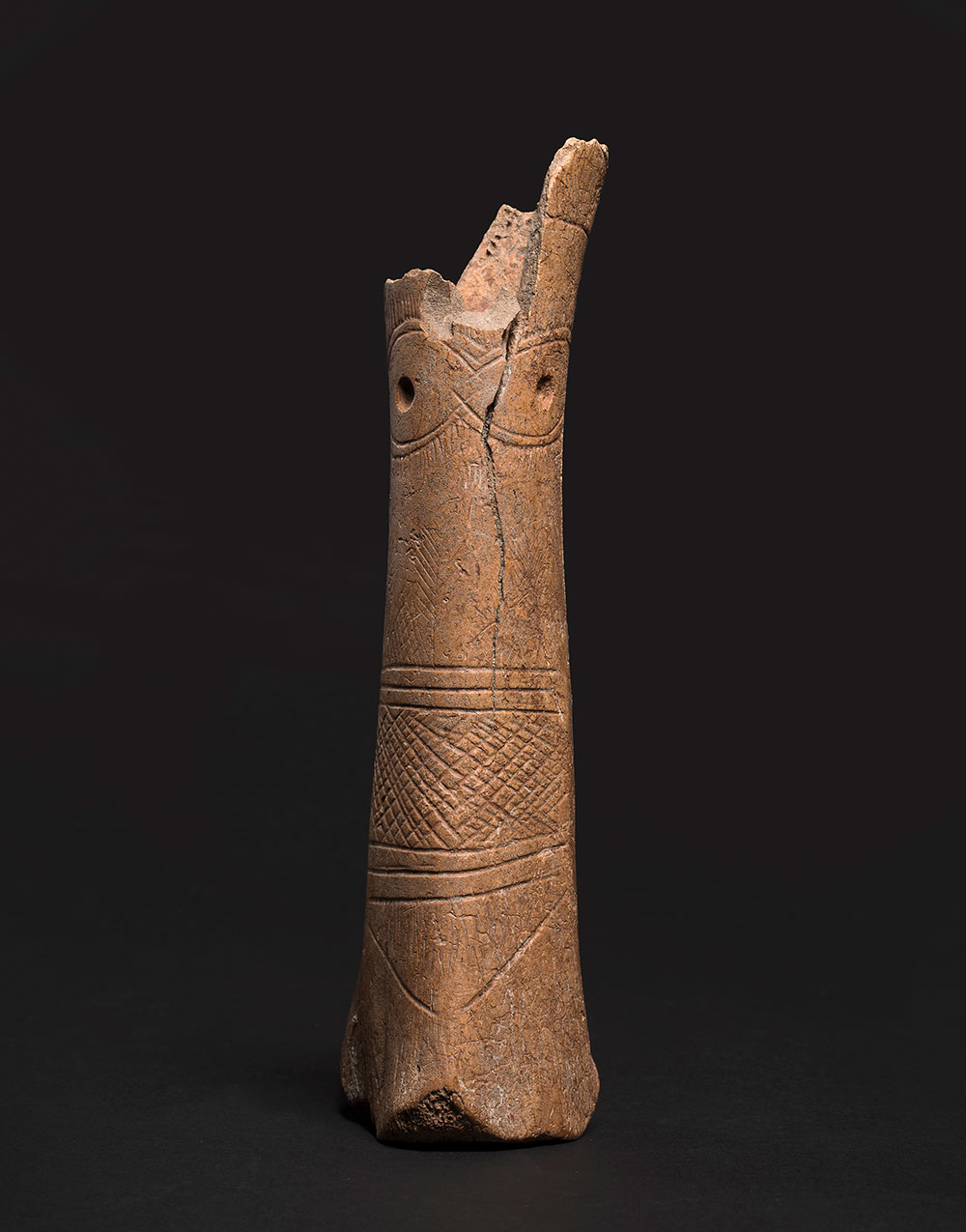
Asherah original painting available through Saatchi Art. Stickers, prints, and other merch available in shop or through RedBubble or Fine Art America. All of the Asherahs in my painting are based on figurines housed in the Israel Museum.
Prior to hooking up Yahweh, Asherah's consorts were El or Ba'al. The pairing with the Great Goddess conferred high status on these gods in polytheistic religions of the area. Raphael Patai, in The Hebrew Goddess, writes that while she was with El, in Ugarit, around the 14th century BCE, her full name was "Lady Asherah of the Sea". "She was, however, also referred to simply as Elath or Goddess. She was the 'Progenitress of the Gods': all other gods ... were her children." She is also mentioned as Ashratum in Sumerian inscriptions dating as far back as 1750 BCE. In Southern Arabia, her name had the form Atharath. Her worshipped stretched from the Mediterranean port cities of Tyre and Sidon, as far as the port of Elath on the Gulf of Aqaba. She was worshipped inland as well, as evidenced by an Amorite king, mentioned in the Amarna letters, named Abdu-Ashirta, "Slave of Asherah". She had been widely worshipped for centuries before the arrival of Yahweh.
Patai writes, "It was almost inevitable that the cult of this great Canaanite mother-goddess, who was venerated also in many other parts of the Ancient Near East, should penetrate Hebrew religion as well." A statue of Asherah was set up in the Jerusalem temple itself, and the cult of Asherah continued among the Hebrews through the periods of the judges and the kings.
Sadly, however, Asherah's relationship with Yahweh did not end well. The Israel Museum reports that over two thousand smashed Asherahs have been found in excavations of the City of David in Jerusalem. They hypothesize that this was connected to "religious reform" of Josiah in the late 7th century BCE.


According to Wikipedia, "The name Asherah appears forty times in the Hebrew Bible, but it is much reduced in English translations. The word ʾăšērâ is translated in Greek as ἄλσος (grove; plural: ἄλση) in every instance apart from Isaiah 17:8; 27:9 and 2 Chronicles 15:16; 24:18, with δένδρα (trees) being used for the former, and, peculiarly, Ἀστάρτη (Astarte) for the latter. In the Hebrew Bible, "A'sherah was patronized by female royals such as the Queen Mother Maacah (1 Kings 15:13). The women of Jerusalem attested, "When we burned incense to the Queen of Heaven and poured out drink offerings to her, did not our husbands know that we were making cakes impressed with her image and pouring out drink offerings to her?” (Jeremiah 44:19)."
On jehovahs-witness.com, I also found arguments for Asherah being Eve, of Adam and Eve, as well as links to Sophia. Asherah's symbol is the tree of life, and one of her epithets is Wisdom. In Canaanite texts, Asherah is called the "Mother of All", while in Genesis 3:20 Eve is called "the mother of all living."
Asherah is sometimes represented as a tree with breasts in ancient artifacts. It has been argued that Garden of Eden story could be the result of a nasty break-up, propaganda by Yahweh's priests against Asherah, with the forbidden Tree of Knowledge relating to practices like the devotion to Asherah, or the use of an Asherah pole. (Source)
According to the Encyclopedia Britannica, "Hebrew scholars now feel that the goddess Ashtoreth mentioned so often in the Bible is a deliberate conflation of the Greek name Astarte and the Hebrew word boshet, “shame,” indicating the Hebrews’ contempt for her cult."
Why was Asherah erased? According to Wikipedia, "Hosea, Jeremiah, and Ezekiel in particular blame the goddess religions for making Yahweh "jealous," and cite his jealousy as the reason Yahweh allowed the destruction of Jerusalem."

Asherah is regaining prominence today. As mentioned earlier she features in Raphael Patai's The Hebrew Goddess, where he describes her historical worship, as well as the continuation of her presence through the concept of Shekinah. Also, her name is becoming popular, with Asher being the 9th most popular baby boy name of 2021, up 14 spots from 2020, according to babycenter. Patai writes that Asherah was extremely popular in all segments of Hebrew society. "One of the reasons for her popularity may have been the belief that she promoted fertility in women and facilitated childbirth. In a 7th century BCE Hebrew incantation text, found in Arslan Tash in Upper Syria, the help of the Goddess Asherah is sought for a woman in delivery. Such an invocation of Asherah may have been contained in the original form of the exclamation made by Leah at the birth of Zilpah's son, whom she named Asher. If so, we have here a testimony to the worship of Asherah in the early period in which the patriarchal traditions of Genesis originated."
10,000 years ago, patriarchal clans spread from Northern Eurasia into Gobekli Tepe in Eastern Anatolia. At that time Gobekli Tepe was abandoned, filled in with soil and the bones of animals and humans. This marked the beginning of the Y-chromosome bottleneck, a time of male genocide when invaders were killing men and kidnapping women. Women began to be treated as a commodity that could be bought and sold, bartered and traded. This imposition of male importance marked the end of peace in the world that we live in.
ReplyDelete